













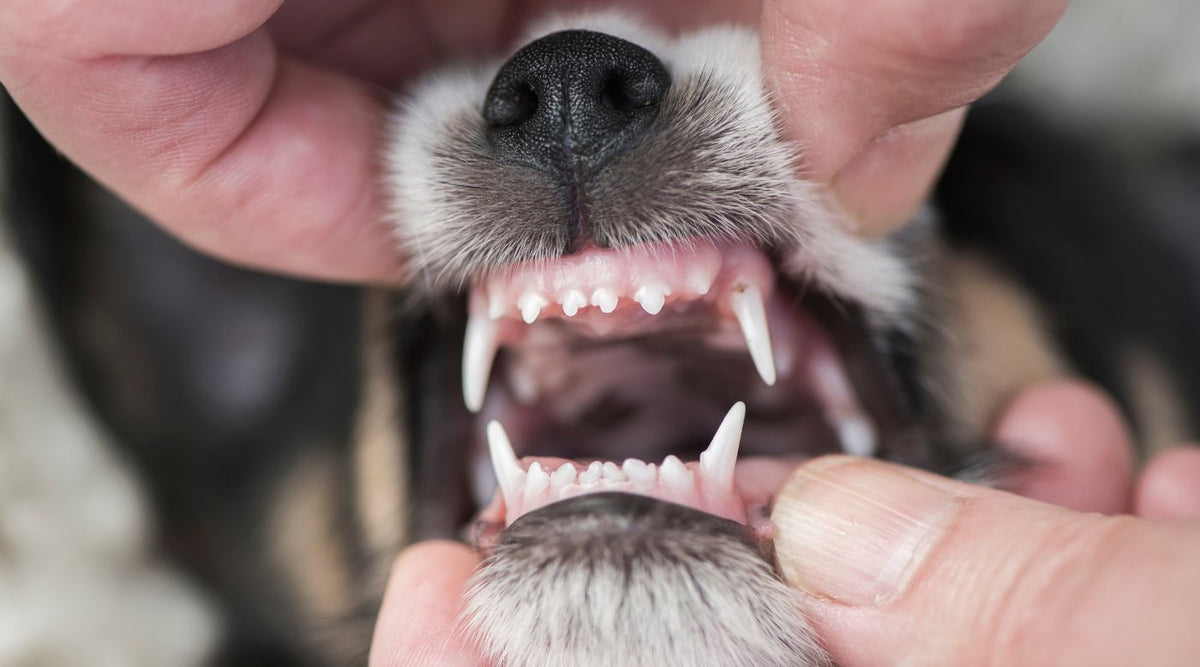
Things are actually going quite well now. Your little dog has gotten used to you regularly checking his teeth. Maybe he even lets you clean his front teeth quite calmly. But as soon as you approach the back teeth, the calm is over. He turns his head to the side, pushes your hand away with his snout, or tries to escape the situation as skillfully as possible. And you wonder how you're ever going to get to his molars without dental care becoming a little challenge every time.
Especially with small dogs, cleaning the back surfaces of the teeth can require a bit more finesse. After all, there's very little room in the mouth, and not every dog finds it pleasant when you go far back with a toothbrush. Yet these areas deserve special attention. This is because dental plaque doesn't just form on the clearly visible front teeth. The back teeth also need to be cleaned regularly to prevent bacterial plaque from accumulating as much as possible.
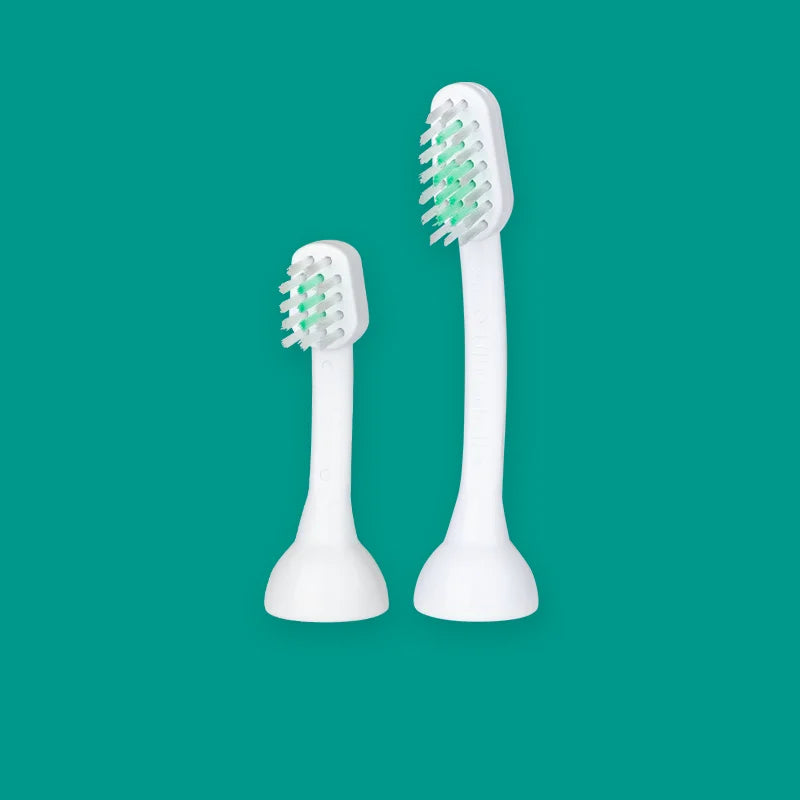
In this article, we'll explain why the back teeth are often harder to reach in small dogs, why cleaning them is particularly important, and how to gradually get your dog used to dental care. You'll also find out what to look for when choosing a suitable brush head and how our emmi-PET NEO Refill Set can complement your care routine.
Why the back teeth are often hard to reach in small dogs
Maybe you've already tried gently lifting your little dog's lip to get a look at his molars. With the front teeth, this usually still works quite easily. But the further back you try to go, the harder it gets. This is due, among other things, to the anatomical conditions in the mouth. Small dogs naturally have less room in their jaws than large dogs. Especially with very small breeds, the teeth can be close together or irregularly arranged. This sometimes makes it harder to reach individual tooth surfaces well with a toothbrush. In addition, your dog may perceive the touch in the back of the mouth as unusual. Maybe he tries to turn his head away, or starts chewing on the brush head.
This doesn't have to mean that he doesn't want dental care at all. Sometimes the brush head is simply too big, or you're trying to clean too many tooth surfaces at once. Maybe you're also unconsciously holding his snout a little tighter because you want to see the back teeth better. This is why it's especially important to proceed with great care with small dogs. You don't have to open the mouth wide to start dental care. Often you can reach the outer tooth surfaces by gently lifting the lip while the mouth remains mostly closed.
The important thing is that your dog stays relaxed and shows no pain. If he suddenly reacts significantly more sensitively than before, you should have a veterinarian check for possible tooth or mouth problems. Because sometimes the apparent reluctance to brush teeth isn't due to the size of the brush head, but rather an uncomfortable or painful spot in the mouth.
Why the molars deserve special attention
Maybe you regularly look into your little dog's mouth and are happy when his front teeth look nice and clean. After all, these are the teeth you see most often when playing, yawning, or panting. But what does it actually look like further back? The molars are particularly quickly forgotten during daily dental care. Yet bacterial plaque can also accumulate there, which in the long term can contribute to problems with the gums and the tooth-supporting apparatus.
Especially the outside of the upper molars are areas in many dogs where dental plaque and tartar frequently appear. With small dog breeds, it is additionally the case that dental and gum diseases occur relatively frequently. Closely spaced teeth and individual peculiarities of the jaw shape can make cleaning even more difficult. Maybe you'll notice a yellowish or brownish coating on the back teeth at some point. Or your dog develops an unpleasant mouth odor, even though you regularly clean his front teeth. You should take such changes seriously. Because soft dental plaque can develop into hard tartar through mineralization. This cannot be easily removed again with a regular toothbrush.
Inflamed gums or already existing diseases of the tooth-supporting apparatus also require a veterinary assessment. That's why it's worth including the back tooth surfaces in your care routine from the start. You don't have to be able to see every single tooth perfectly for this. What's much more important is that you proceed systematically and regularly clean the easily reachable tooth surfaces. And if you're unsure whether you're reaching the molars sufficiently, you can have the right technique shown to you at your veterinarian's office. Because especially with small dogs, good dental care can make an important contribution to supporting long-term oral health.
How to make dental care more pleasant for your little dog
Imagine your little dog is sitting next to you on the sofa. You've already laid out the toothbrush and really just want to quickly clean his teeth. But as soon as you try to get to the back teeth, he starts to get restless. Maybe you hold his snout a little tighter so he doesn't pull away. Or you try to get the cleaning over with as quickly as possible. However, this can make the situation even more unpleasant for your dog. It is much more helpful to break dental care into small, manageable steps.
Start at a place where your dog already accepts touch well. Maybe he lets you lift his lip or tolerates the brush head on his front teeth for a short moment. If he stays relaxed during this, you can slowly work your way further back. Make sure you don't hold his snout against his resistance. Instead, you can work with short practice sessions and kindly reward calm, voluntary cooperation. Sometimes it also helps to perform dental care at a time when your dog is already relaxed. Maybe after a nice walk or in the evening when he has settled down next to you.
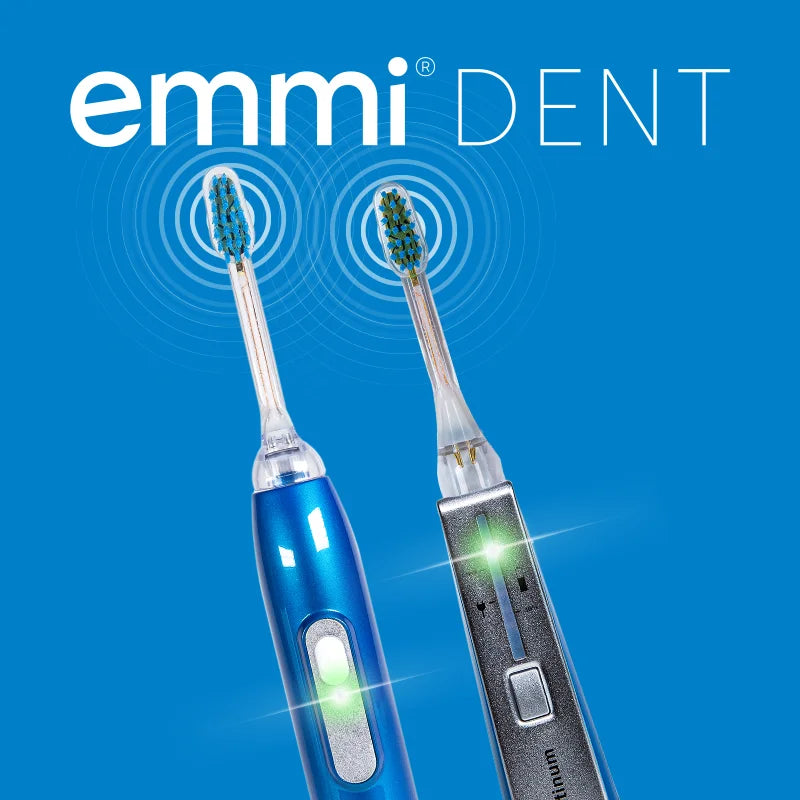
The important thing is that you don't try to clean all the back teeth completely right away. Maybe you only manage one side today. Tomorrow you can try the other. Such small steps are valuable because your dog learns that dental care with our emmi-PET Ultrasonic Toothbrush doesn't have to be unpleasant or threatening. If he turns his head away, freezes, or clearly wants to pull away, you should interrupt the exercise. And if he continues to react strongly to touch in the back of the mouth despite careful desensitization, a veterinary check-up is advisable. Because your dog shouldn't just have to put up with dental care.
Why the molars deserve special attention
Maybe you regularly look into your little dog's mouth and are happy when his front teeth look nice and clean. After all, these are the teeth you see most often when playing, yawning, or panting. But what does it actually look like further back? The molars are particularly quickly forgotten during daily dental care. Yet bacterial plaque can also accumulate there, which in the long term can contribute to problems with the gums and the tooth-supporting apparatus.
Especially the outside of the upper molars are areas in many dogs where dental plaque and tartar frequently appear. With small dog breeds, it is additionally the case that dental and gum diseases occur relatively frequently. Closely spaced teeth and individual peculiarities of the jaw shape can make cleaning even more difficult. Maybe you'll notice a yellowish or brownish coating on the back teeth at some point. Or your dog develops an unpleasant mouth odor, even though you regularly clean his front teeth.
You should take such changes seriously. Because soft dental plaque can develop into hard tartar through mineralization. This cannot be easily removed again with a regular toothbrush. Inflamed gums or already existing diseases of the tooth-supporting apparatus also require a veterinary assessment. That's why it's worth including the back tooth surfaces in your care routine from the start.
You don't have to be able to see every single tooth perfectly for this. What's much more important is that you proceed systematically and regularly clean the easily reachable tooth surfaces. And if you're unsure whether you're reaching the molars sufficiently, you can have the right technique shown to you at your veterinarian's office. Because especially with small dogs, good dental care can make an important contribution to supporting long-term oral health.
How to make dental care more pleasant for your little dog
Imagine your little dog is sitting next to you on the sofa. You've already laid out the toothbrush and really just want to quickly clean his teeth. But as soon as you try to get to the back teeth, he starts to get restless. Maybe you hold his snout a little tighter so he doesn't pull away. Or you try to get the cleaning over with as quickly as possible. However, this can make the situation even more unpleasant for your dog. It is much more helpful to break dental care into small, manageable steps.
Start at a place where your dog already accepts touch well. Maybe he lets you lift his lip or tolerates the brush head on his front teeth for a short moment. If he stays relaxed during this, you can slowly work your way further back. Make sure you don't hold his snout against his resistance. Instead, you can work with short practice sessions and kindly reward calm, voluntary cooperation. Sometimes it also helps to perform dental care at a time when your dog is already relaxed. Maybe after a nice walk or in the evening when he has settled down next to you.
The important thing is that you don't try to clean all the back teeth completely right away. Maybe you only manage one side today. Tomorrow you can try the other. Such small steps are valuable because your dog learns that dental care doesn't have to be unpleasant or threatening. If he turns his head away, freezes, or clearly wants to pull away, you should interrupt the exercise. And if he continues to react strongly to touch in the back of the mouth despite careful desensitization, a veterinary check-up is advisable.